7 Hacks to Make Herbs Last 3x Longer
Fresh herbs are basically the most expensive way to throw money in the trash. You buy a whole bunch of cilantro for one recipe, use two tablespoons, and watch the rest turn into a slimy green regret by day four. I got tired of that cycle, so I tracked down every storage trick that actually works.
Let’s make your herbs last.
Why Herbs Wilt So Fast in the First Place
Herbs are basically tiny, delicate plants still trying to survive after you cut them. They lose moisture through their leaves constantly, and once that moisture is gone, there’s no bringing it back. Heat, light, and improper storage speed up that decline fast.
Ever wondered why the herbs at the grocery store already look tired before you even get them home? They’ve likely been sitting in a warm delivery truck and a bright display case for way too long already.
Pro Tip 1: Buy herbs with the roots still attached whenever possible. Rooted herbs like cilantro and basil last noticeably longer than the pre-cut bunches.
1. Treat Soft Herbs Like a Bouquet of Flowers
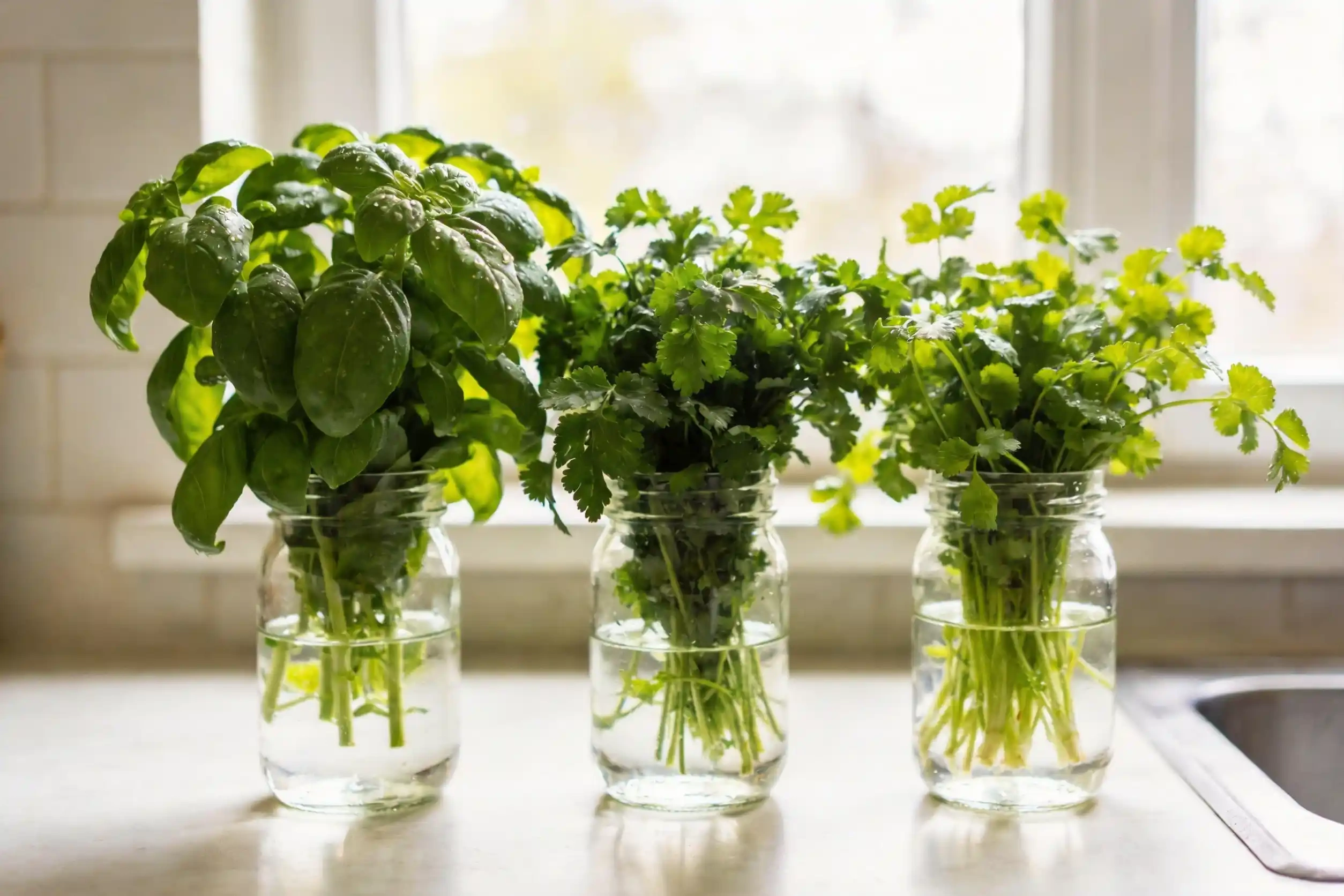
This is the single biggest game-changer, IMO. Soft herbs like cilantro, parsley, and basil actually do best standing upright in a jar of water, just like flowers.
Here’s how to set it up:
- Trim the stems at an angle before placing them in water.
- Fill a jar with an inch or two of water.
- Cover loosely with a plastic bag (except basil, more on that below).
- Change the water every 2-3 days.
I switched to this method years ago, and my parsley genuinely lasts two to three weeks now instead of rotting in four days.
The One Exception: Basil
Basil hates the cold and turns black if you refrigerate it. Keep it in water on the counter, away from direct sunlight, and skip the plastic bag entirely. It’s a diva, but it’s worth the special treatment.
2. Wrap Hardy Herbs in a Damp Paper Towel
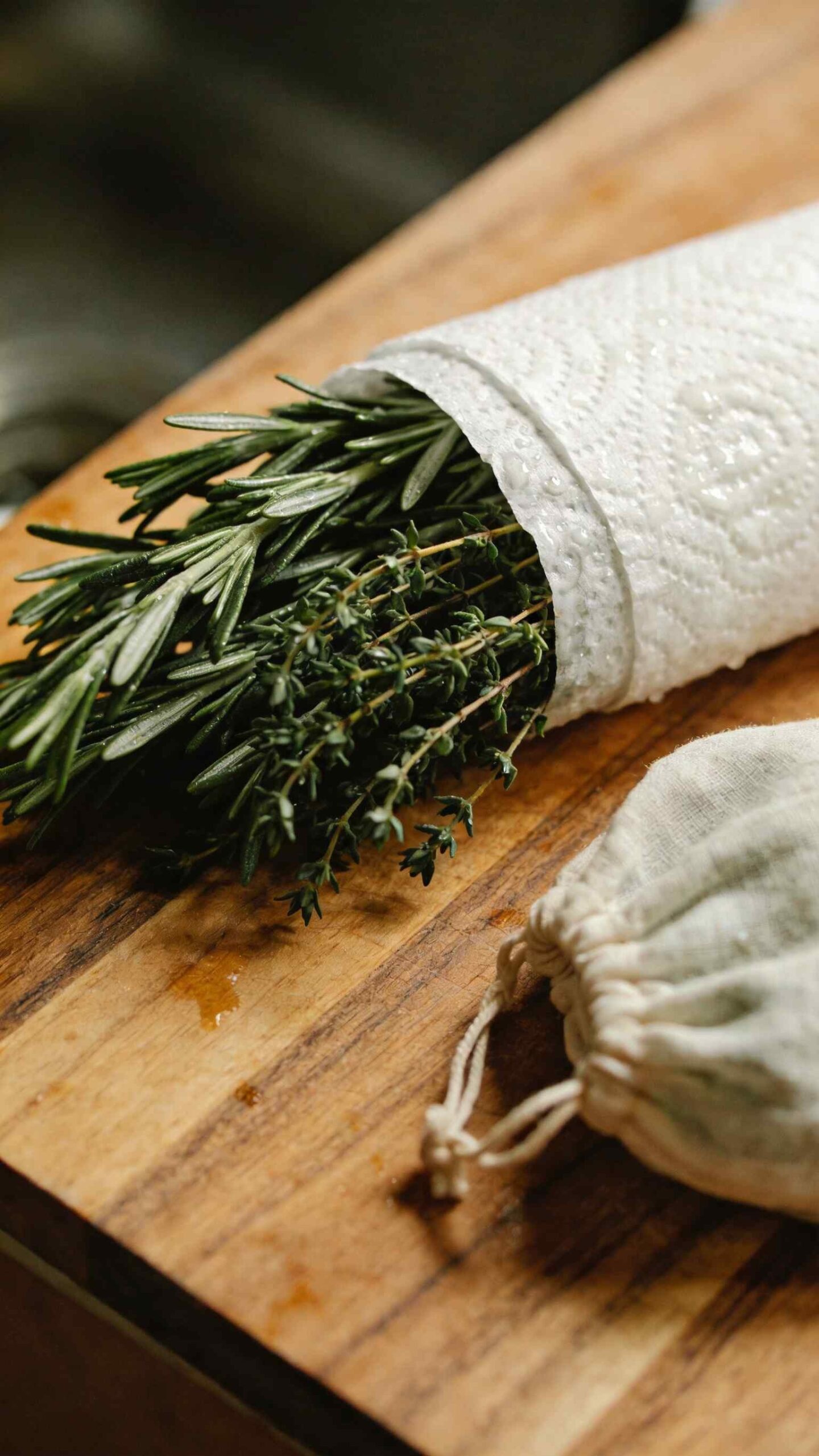
Hardy herbs like rosemary, thyme, and sage behave completely differently than soft herbs. These do best wrapped, not standing in water.
Follow this process:
- Dampen a paper towel so it’s moist but not soaking wet.
- Wrap the herbs loosely in the towel.
- Place the bundle in a produce bag or container.
- Store in the fridge’s crisper drawer.
This method keeps just enough humidity around the leaves without drowning them. FYI, too much moisture is just as bad as too little for these varieties.
Pro Tip 2: Re-dampen the paper towel every few days rather than replacing it. This keeps humidity consistent without disturbing the herbs.
3. Don’t Wash Herbs Until You’re Ready to Use Them
Washing herbs the moment you get home feels productive, but it actually speeds up decay. Excess water sitting on the leaves creates the perfect environment for mold and sliminess.
Only rinse what you’re using right before you cook or garnish with it. Store the rest dry, and wash it fresh each time you grab a portion.
4. Freeze Herbs in Oil for Long-Term Storage
Freezing is a fantastic option when you know you won’t use a whole bunch in time. Freezing herbs in oil actually preserves flavor better than freezing them plain.
How to Freeze Herbs in Oil
- Chop herbs finely and pack them into ice cube trays.
- Cover with olive oil until each compartment is full.
- Freeze until solid, then transfer cubes to a freezer bag.
- Drop a cube straight into a pan whenever a recipe calls for it.
I keep a stash of these in my freezer at all times, and they’re a lifesaver for quick weeknight dinners. Just don’t use these cubes for garnishing, since the texture changes once frozen.
Pro Tip 3: Label each freezer bag with the herb type and date. Frozen herb cubes all look suspiciously similar after a few weeks, and nobody wants a mystery cube in their sauce.
5. Keep Herbs Away From Ethylene-Producing Produce
Here’s something most people never think about: certain fruits and vegetables release ethylene gas, which speeds up spoilage in nearby produce, herbs included. Apples, bananas, and tomatoes are some of the worst offenders.
Store your herbs in a separate drawer or area of the fridge, away from these ethylene producers. It’s a small change, but it makes a real difference in how fast your herbs wilt.
6. Use a Salad Spinner Before Storing
Excess moisture on herb leaves is one of the fastest ways to speed up rot. Running your herbs through a salad spinner after washing removes surface water without damaging the delicate leaves.
This step matters most for herbs you plan to store wrapped in paper towels or in bags. Dry leaves paired with slight humidity from a damp towel strike the right balance. Soaking wet leaves in a sealed bag, on the other hand, is a recipe for slime.
7. Revive Wilted Herbs Before Giving Up on Them
Don’t toss herbs the second they start looking a little sad. Soft herbs especially can often be revived with the right trick.
Try this before throwing anything away:
- Trim the stems to expose fresh, unclogged ends.
- Submerge the whole bunch in ice water for 10-15 minutes.
- Shake off excess water and pat dry gently.
- Store properly using the jar or paper towel method above.
I’ve brought back plenty of “hopeless” herb bunches with this trick alone. It doesn’t work miracles on herbs that are already slimy or moldy, but for simple wilting, it’s surprisingly effective 🙂
Pro Tip 4: Add a few ice cubes directly to your herb storage jar’s water. It keeps the water colder for longer between changes, which slows bacterial growth.
Wrapping It Up
Making your herbs last longer really comes down to matching the storage method to the herb type. Soft herbs want water and light. Hardy herbs want a damp wrap and darkness. Freezing and reviving techniques fill in the gaps for everything else.
Will every herb last forever? No, nothing does. But you’ll waste a lot less money and always have fresh herbs ready when a recipe calls for them. Now go rescue that wilting cilantro before it’s too late :/